
The AIgorythm project

Playwright and actor
Novelist
Italian-Peruvian naturalist and geographer
Singer and percussionist
Last Inca emperor

Politician, former prime Minister
Journalist and TV host
Poet
Inca warrior
Biophysicist
Doctor and researcher
Singer and songwriter
Film director, Berlin Golden Bear winner

Football player
Writer and journalist
Chess player
Industrialist
Former general
Specialist in public health
Mathematician and engineer
Neurologist and anthropologist
Painter
Football player
National hero, military leader

Fashion designer

Singer-songwriter
Marathon runner
Indigenous Peruvian chronicler
Writer and television host
Folk musician
Poet and guerrilla
Chef, known for fusion cuisine
Poet and artist
Peruvian tennis player
Football coach
Leader of the indigenous rebellion
Military hero

Latin singer
War of the Pacific hero
The youngest mother in history
Politician
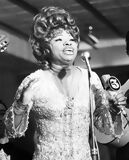
Creole music singer
Tennis player

Musician
Politician and founder of the Christian Democratic Party
Founder of Sodalitium Christianae Vitae
Archaeologist and anthropologist
Television host

Actress and singer

Contemporary sculptor
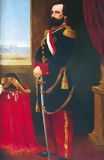
Military figure and historical figure

Fashion photographer
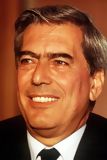
Writer, Nobel Prize in Literature, Politician
Revolutionary leader
Leader of the indigenous rebellion

Musician from Gaia band
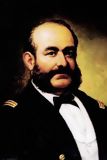
War hero
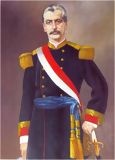
Military leader and politician
Chef, known for Nikkei cuisine
Television personality
Writer

Football player
Inventor and aerospace pioneer
Soldier and inventor
TV presenter and actress
Actor
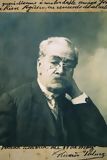
Writer and historian
Archaeologist, founder of Caral site
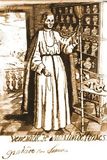
Monk and Saint
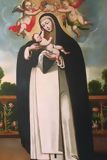
Saint, patron of Latin America
Oncologist

Singer, Latin Grammy winner

Singer
Actress
Painter
Inca leader
Archbishop, saint

Former head of secret services
Popular singer

Fashion designer
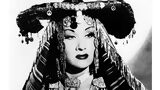
Exotic music singer
Juan Santos Atahualpa, born around 1710 in the region of Chanchamayo, in the central jungle of Peru, was an indigenous leader who led one of the most significant uprisings against Spanish colonial rule in the 18th century. His figure has become emblematic of the struggle of indigenous peoples in the Amazonian region, and his rebellion marked a turning point in the history of indigenous resistance against colonial power. Although many details about his life remain shrouded in mystery, his legacy continues to live on in the indigenous communities of the Peruvian jungle.
Little is known about the early years of Juan Santos Atahualpa, but he is believed to have belonged to an Asháninka or Yanesha indigenous community. According to some historical accounts, he may have received education in Jesuit missions in Cuzco, where he learned to read and write in Spanish and possibly Latin, in addition to having knowledge of Catholic religion. However, this education also made him aware of the injustices and abuses that the Spanish inflicted on indigenous populations. The combination of his indigenous roots and formal education turned him into a leader with a deep understanding of indigenous traditions and the colonial power he opposed.
In 1742, Juan Santos Atahualpa emerged as the leader of a rebellion aimed at expelling the Spanish colonizers from the Chanchamayo region and the central jungle of Peru. He proclaimed himself a descendant of the Incas, adopting the name Atahualpa, the last Inca emperor, and claimed the legitimate right to rule the Peruvian territory in the name of his ancestors. His rebellion began in the mountains, where he quickly united different indigenous groups, such as the Asháninkas, Yaneshas, and Shipibos, in a common struggle against the Spanish.
Juan Santos Atahualpa's strategy was based on using the indigenous people's knowledge of the jungle's geography and guerrilla tactics to attack Spanish outposts and Catholic missions. His rebellion enjoyed considerable success during its early years, expelling Jesuit missionaries and gaining control over much of the Chanchamayo region. Unlike other indigenous revolts, Juan Santos Atahualpa was not easily defeated, making him a persistent threat to colonial authorities.
Juan Santos Atahualpa proved to be a charismatic and shrewd leader, capable of uniting various indigenous ethnicities under a common cause. In addition to his military skills, he used his position as a self-proclaimed descendant of the Incas to inspire loyalty among his followers. He also had a spiritual vision for his rebellion, promising his supporters the restoration of the Tahuantinsuyo, the great Inca Empire, and a return to a golden age of freedom and justice for indigenous peoples.
Throughout his rebellion, Juan Santos Atahualpa maintained a strict moral code among his troops, prohibiting abuses against women and allied communities. This discipline, along with his ability to mobilize indigenous peoples, allowed his rebellion to remain active for more than a decade, despite the Spanish efforts to crush it. The organized resistance led by Juan Santos Atahualpa posed a significant challenge to colonial power, which was unable to fully reclaim control over the Amazonian region.
As time passed, the rebellion of Juan Santos Atahualpa began to face difficulties. The Spanish colonial forces, although initially surprised by the insurgents' success, started organizing more effective counterattacks. However, the jungle's geography and lack of resources caused the conflict to become a stalemate. The Spanish managed to regain some peripheral areas, but they were never able to capture Juan Santos Atahualpa himself or completely extinguish the rebellion.
The lack of external support, combined with difficulties in maintaining a steady supply of weapons and food in the jungle, weakened the rebels. Although it is unclear when or how Juan Santos Atahualpa died, he is believed to have passed away after 1755, possibly in battle or from illness. However, his death did not immediately end the rebellion, as indigenous communities in the region continued to resist Spanish occupation for several more years.
Although his rebellion ultimately did not succeed in overthrowing Spanish colonial power, Juan Santos Atahualpa has become a legendary figure in the history of indigenous resistance in Peru. His leadership inspired later generations of fighters for independence and social justice. His name has been reclaimed by indigenous movements seeking justice and recognition of the rights of native communities in contemporary Peru.
Moreover, his rebellion highlighted the limitations of Spanish control over the Amazonian regions, a reality that would persist well into the 19th century. Despite its eventual decline, the figure of Juan Santos Atahualpa remains a symbol of the fight for self-determination and resistance to colonization.
Juan Santos Atahualpa was an indigenous leader whose legacy continues to resonate in the history of Peru. His rebellion, although not successful in its goal of expelling the Spanish colonizers, represented a significant challenge to colonial power and symbolized the resistance of indigenous peoples in the face of centuries of oppression. His figure is still remembered today as an example of the fight for freedom and dignity for indigenous peoples.
