
The AIgorythm project

Playwright and actor
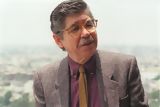
Novelist
Italian-Peruvian naturalist and geographer
Singer and percussionist
Last Inca emperor

Politician, former prime Minister
Journalist and TV host
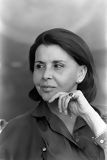
Poet
Inca warrior
Biophysicist
Doctor and researcher
Singer and songwriter
Film director, Berlin Golden Bear winner

Football player
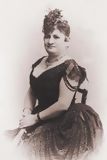
Writer and journalist
Chess player
Industrialist

Former general
Specialist in public health
Mathematician and engineer
Neurologist and anthropologist
Painter
Football player
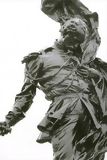
National hero, military leader

Fashion designer

Singer-songwriter
Marathon runner
Indigenous Peruvian chronicler
Writer and television host
Folk musician
Poet and guerrilla
Chef, known for fusion cuisine
Poet and artist
Peruvian tennis player
Football coach
Leader of the indigenous rebellion
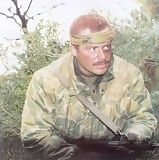
Military hero

Latin singer
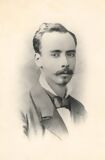
War of the Pacific hero
The youngest mother in history
Politician
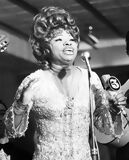
Creole music singer
Tennis player

Musician
Politician and founder of the Christian Democratic Party
Founder of Sodalitium Christianae Vitae
Archaeologist and anthropologist
Television host

Actress and singer
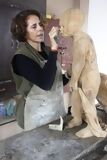
Contemporary sculptor
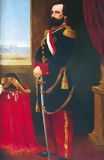
Military figure and historical figure

Fashion photographer
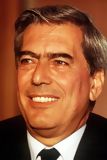
Writer, Nobel Prize in Literature, Politician
Revolutionary leader
Leader of the indigenous rebellion

Musician from Gaia band
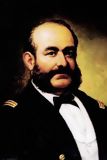
War hero
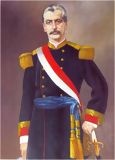
Military leader and politician
Chef, known for Nikkei cuisine
Television personality
Writer

Football player
Inventor and aerospace pioneer
Soldier and inventor
TV presenter and actress
Actor
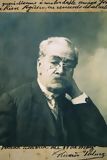
Writer and historian
Archaeologist, founder of Caral site
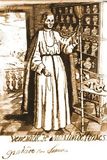
Monk and Saint
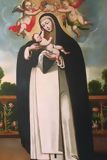
Saint, patron of Latin America
Oncologist

Singer, Latin Grammy winner

Singer
Actress
Painter
Inca leader
Archbishop, saint

Former head of secret services
Popular singer

Fashion designer
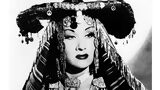
Exotic music singer
Arturo Cavero Velásquez, better known as "Zambo" Cavero, was one of the greatest representatives of Creole and Afro-Peruvian music. He was born on November 29, 1940, in the El Rímac district of Lima, into a family of Afro-Peruvian roots. His career was marked by his talent as a singer and percussionist, and his ability to passionately interpret the most representative songs of Peruvian popular music. "Zambo" Cavero is considered an icon of Afro-Peruvian culture, and his legacy has endured through the generations.
From a young age, Arturo Cavero showed a natural talent for music, especially for Afro-Peruvian and Creole rhythms. His ability to play the cajón and other percussion instruments led him to join several musical groups in Lima. It was during these early stages of his career that he began to stand out for his powerful voice and commanding stage presence. Soon, Cavero became a well-known figure on the Creole music stages of Lima.
One of the most important collaborations in Arturo "Zambo" Cavero’s career was with guitarist and singer Óscar Avilés, known as the "First Guitar of Peru." Together, they formed one of the most memorable duos in Peruvian Creole music. With Avilés on guitar and "Zambo" Cavero on vocals, they performed some of the most iconic songs of the Creole repertoire, such as "Y se llama Perú," "Contigo Perú," and "Todos vuelven." These performances not only resonated in Peru but also became symbols of national identity.
Arturo "Zambo" Cavero’s style was characterized by his powerful and emotive voice, which conveyed the deep sentiment of the songs he performed. His repertoire included Creole waltzes, marineras, polkas, and festejos, all genres deeply rooted in Peruvian musical tradition. Cavero was a master in interpreting these genres, achieving a perfect balance between vocal technique and passion in every performance.
Throughout his career, Arturo Cavero received multiple awards for his contribution to Peruvian culture and music. In 1987, he was awarded the Order of the Sun of Peru, the highest civilian honor in the country, for his work in promoting Creole and Afro-Peruvian music. Over the years, his figure solidified as a reference in Peruvian popular music, and his legacy continues to live on through the generations of musicians who followed him.
In addition to his musical career, Arturo "Zambo" Cavero was an important figure for the Afro-Peruvian community. Through his music, Cavero celebrated and highlighted the cultural contributions of the Afro-descendant population in Peru. His identity as an Afro-Peruvian was an integral part of his art, and he always took pride in his roots and in representing his community on stage. For this reason, Cavero is remembered not only as a great artist but also as a symbol of struggle and recognition for the Afro-Peruvian community.
Arturo "Zambo" Cavero passed away on October 9, 2009, at the age of 68. His death was a significant loss for Creole and Afro-Peruvian culture, and he was honored with multiple tributes across the country. His legacy remains present in Peruvian music, and his performances continue to be listened to and admired by new generations. "Zambo" Cavero is an example of Peru’s rich cultural heritage and the importance of Creole and Afro-Peruvian music in the national identity.
Arturo "Zambo" Cavero was an artist who transcended borders with his music, bringing the emotion and tradition of Creole and Afro-Peruvian music to every corner of Peru and beyond. His voice and cultural legacy remain a fundamental part of the country’s musical history. Today, Cavero is remembered not only as one of the greatest exponents of Peruvian popular music but also as a symbol of the pride and resilience of Afro-Peruvian culture. His influence continues to live on in music and in the hearts of all Peruvians.
