
Discover Peru


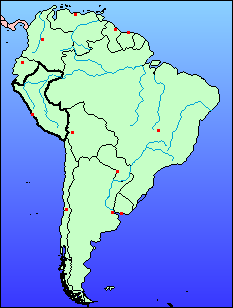
Peru is located in the Southern Hemisphere, on the western coast of South America. It is a crossroads nation that shares 6,940 km of land borders with five neighboring countries: Bolivia, Brazil, Chile, Colombia, and Ecuador. Its total area, including its Pacific islands and those of the mythical Lake Titicaca, amounts to 1,285,216 km². This makes it the third largest country in South America, representing about two and a half times the size of France. The country is bordered by an impressive coastline of 3,079.5 km and claims a maritime domain extending 200 nautical miles offshore.
The Peruvian relief is exceptionally complete and varied. The country is marked by extreme topographical contrasts: from desert zones on the coast to dizzying Andean peaks rising above the altiplano (sometimes crowned by the eternal snows of glaciers), passing through the abrupt geography of the high jungle and the lush immensity of the Amazonian plain.
Many attempts have been made to classify the Peruvian territory based on climate, flora, or altitude. However, the most accurate and recognized classification today is based on altimetric and morphological criteria. It replaces the simplistic "Coast, Highlands, Jungle" division with eight distinct natural regions:
Peru is one of the few countries in the world to possess such climatic diversity (it is home to 28 of the 32 climates recorded on the planet). This variety is mainly due to the natural barrier formed by the Andes mountain range. Overall, the year is divided into two seasons (dry and rainy), the characteristics of which vary by region.
On the coast, which is globally dry, two zones can be distinguished:
In the Andean region, the climate evolves from temperate-warm at the bottom of the valleys, to glacial on the summits. The main inter-Andean valleys (between 2,500 and 3,500 m) enjoy an average of 11°C to 16°C. The dry season runs from May to September, ideal for travelers, while heavy rains occur during the rest of the year.
The Amazon rainforest, which accounts for over 50% of the national territory, is divided into three tropical climates: the high jungle border (very rainy, between 22°C and 26°C), the high jungle (the warmest zone with an average of 31°C and low thermal variations), and the low jungle (warm and humid, with less than 3,000 mm of annual rainfall). The dry months correspond to those of the mountain range, but the rainy season (January to April) is much more intense here.
The Peruvian Andes are a central link in the Andes mountain range, this monumental chain extending from Cape Horn in southern Chile to Colombia and Venezuela. Geographers divide it into three sectors in Peru:
This rugged relief gives rise to numerous waterways. Major rivers include the Amazon (which originates in Peru), the Marañón, the Ucayali, the Urubamba, the Napo, and the Madre de Dios. These rivers feed a network of 12,201 lakes and lagoons across the country. The vast majority of these lakes (7,441) drain into the Atlantic basin, 3,896 into the Pacific basin, while 841 feed the basin of the legendary Lake Titicaca (and 23 other lakes form internal basins). The presence of Lake Junín, located at 4,100 m in altitude, should also be noted.
The desert coastal strip, crossed from north to south by the famous Pan-American Highway, concentrates the country's largest metropolises. The ocean bordering it is exceptionally rich, the result of the meeting between the cold Humboldt Current and the warm El Niño Current. This unique marine environment is home to large colonies of sea lions, Humboldt penguins, as well as flocks of seabirds (brown boobies, Peruvian pelicans, Inca terns, and Chilean flamingos).
Inland, the Andean fauna is dominated by the majestic flight of the condor and the Puna ibis, while the landscapes are dotted with herds of South American camelids (llamas, alpacas, guanacos, and vicuñas). On the Amazonian slopes, biodiversity explodes with the presence of jaguars, spectacled bears, tapirs, and endemic plants unique in the world. Faced with current climate challenges, this vast wildlife is protected by a network of national parks and reserves (about 30 zones historically covering nearly 7% of the country, a figure that is expanding today).
Finally, this fascinating geography is home to a people of multiple origins. Peru is an ethnic melting pot composed of indigenous populations (45%), mestizos born of the Hispanic-Amerindian mix (37%), descendants of Europeans (15%), as well as Afro-Peruvian communities and people of Asian descent (Japanese and Chinese, representing about 3%).